
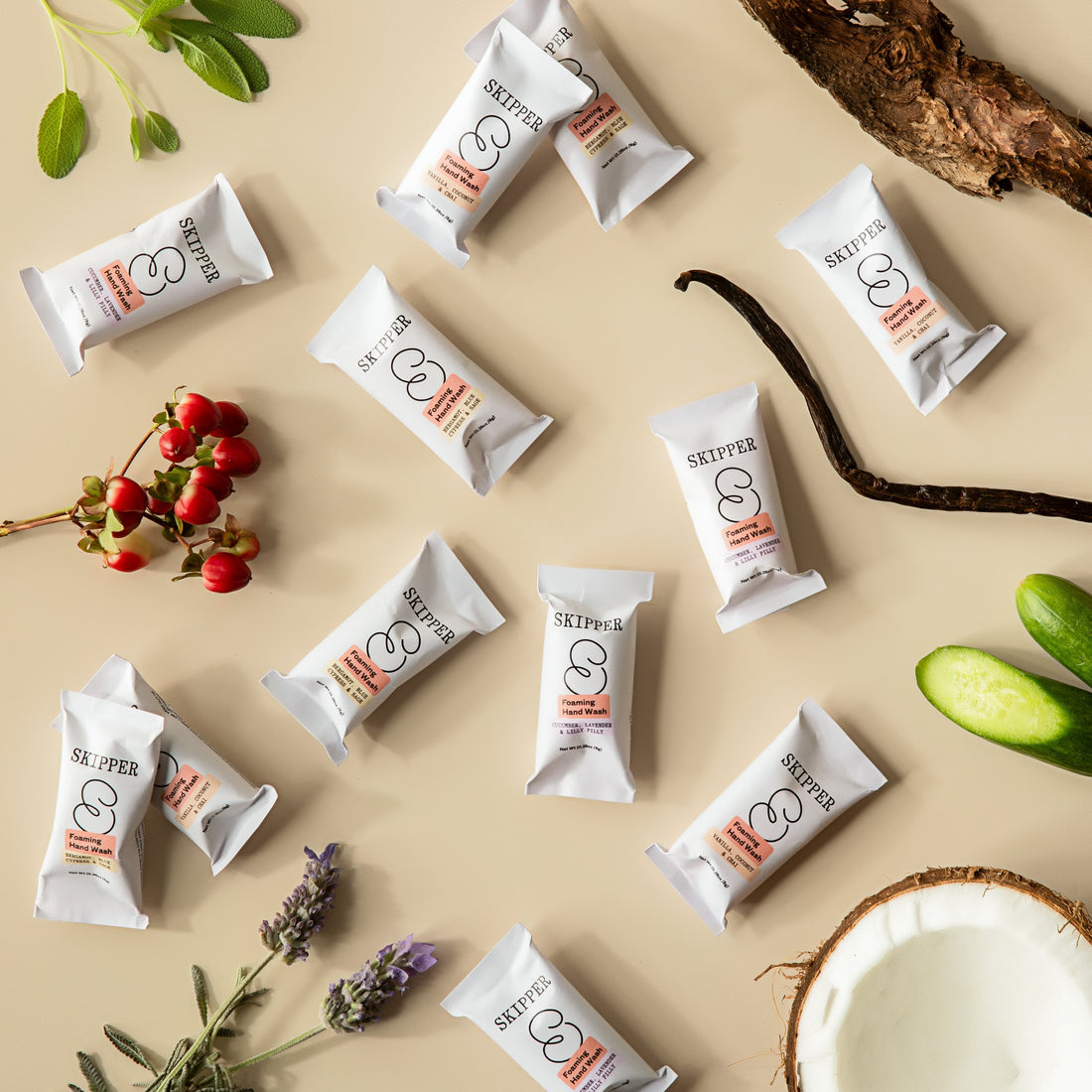
The tear-open wrappers on our just-add-water products are changing from a home compostable film to a processable soft plastic. It affects the six tear-open products in our range, and the transition will occur over the next 12 months.
We're making the change because the compostable wrappers aren't reliably keeping the moisture out.
We appreciate it's a big change and may feel counterintuitive to our mission to cut plastic waste. The short answer is progress over perfection. Below we shed light on what the film was doing to the product, what we've tested, what the new wrapper means for plastic in landfill, and what to do with our new wrappers.
Please take your time to read and understand these changes. If you'd rather watch instead, hear it from May (our Co-Founder) here.

The short version
Our compostable wrappers aren't reliably keeping the moisture out.
For some customers, particularly in the humid parts of Australia, moisture crept its way through the film. Sachets bloated, tablets broke down before anyone got to use them, and product quality suffered. Some of the war stories from our community are shared below.

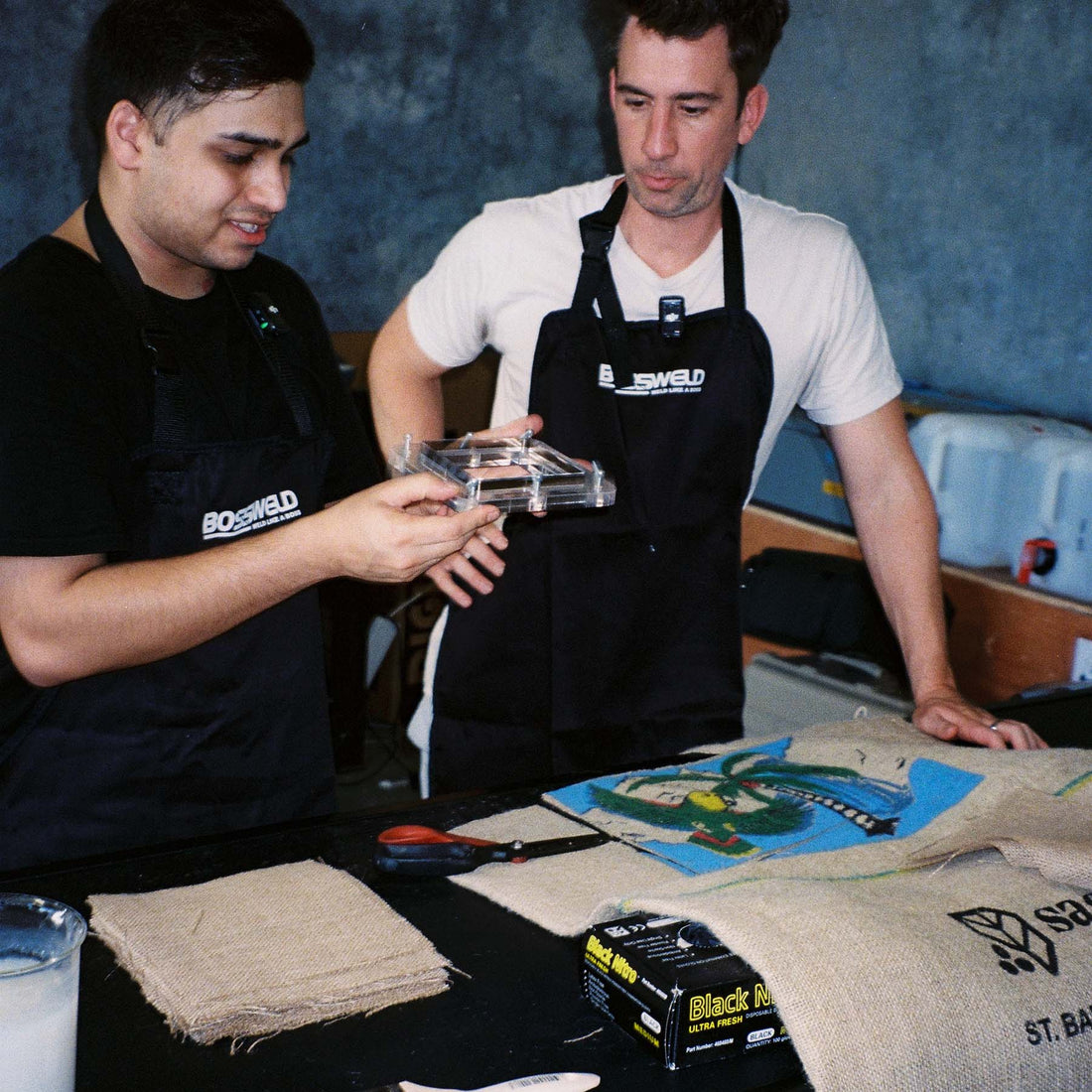
We've spent years trying to make home compostable reliable, testing 17 different compostable films along the way. This includes combinations of PLA, starch and kraft paper to name a few. The most recent was a kerbside-recyclable coated paper, and before that a regenerated cellulose film. Both failed on water vapour and oxygen transfer rates.

These are accelerated tests under harsher humidity and temperature conditions than you'd expect, but they're strong benchmarks for real-world reliability.
As optimists, we've persevered because we wanted to hold onto our plastic-free wrappers. However, as Skipper continues to reach more communities around Australia, we've felt it best to protect the product reliability and integrity for all Australians first and foremost.
Despite the changes, we'll continue to explore lower-impact options as we transition. This is a journey, not the destination.
The new wrappers go in your regular bin, or into a soft plastics collection if there's one readily available to you. They can't go into the kerbside yellow bin at this stage.
Q&A:
Q: Doesn’t switching to plastic defeat the point of Skipper?
The new wrappers reduce plastic waste going to landfill by over 98% compared to traditional products.
That's because the new wrapper weighs half a gram. In contrast, bottles use more plastic include pumps/triggers that cat be recycled, and have low recovery rates in Australia (as published here).

This assumes no soft plastics collection or processing for our wrappers to capture the worst case scenario.
Given our mission, I appreciate soft plastic may seem like a backwards. Our view is that if it makes just-add-water more accessible and normalised here, it's a win for the country and the communities we serve.
Q: How to dispose the new wrappers
These go into the regular trash, or a soft plastics drop-off. They are not kerbside recyclable.
The wrapper material is made from polyolefins, without the mixed-polymer laminates, PET or foil layers commonly found in alternatives that compromise responsible processing of soft plastics.
Q: What's changing
Just our tear-open wrapper products: specifically hand wash, body wash, face wash, universal cleaner, dish liquid and machine cleaner.
Q: Could we just skip the wrapper?
Unfortunately we can't as the products are designed to react and respond to water. They are much more sensitive to moisture in the air compared to other types of tablets or powders. Even storage in the tins requires a wrapper to maintain shelf-life.
Q: Why now, after five years?
Because we'd been quietly compromising product performance to hold onto it. We may well have been the only company in the world still selling just-add-water products in home-compostable wrappers. The industry is using non-compostable wrappers for exactly the reasons we're now changing.
Q: Is this permanent?
Absolutely not. This is about progress over perfection. We're confident in transitioning once again to a lower-impact option, and our suppliers are constantly sending us new opportunities.
We'll even be testing new wrappers during the 12-month transition to the soft plastic wrappers.
Q: Is there a commercial reason?
Plastic is generally cheaper, but this is not a commercial decision. We'd pay more than we were previously for a lower-impact alternative that actually held up.
Q: When is the changeover happening?
Products will start to roll out with the new wrappers over the coming months, with all products transitioning over the next 12 months.
Q: When is the changeover happening?
Products will start arriving in the new wrappers over the coming months, with the full range transitioning over the next 12 months, so you may see both wrappers in your orders while we work through it.
What we're focusing on next
- New and improved Skipper products
- Strengthening our Australian-made manufacturing and supply chains
- Testing more wrapper samples from suppliers as they keep developing smarter alternatives
We're doing our very best here, and we're grateful to everyone who's backed Skipper so far. You took a leap on something better, and we're committed to making you proud.
Much love,