
It Took 70 Years to Build the Plastic Problem. Here's How We Start Unbuilding It.
Plastic is often framed as the villain of the environmental story. But the history is more complicated than that.
In fact, the very first plastic was created to solve an environmental problem.
It was, genuinely, an environmental innovation. Understanding that history matters, because if we know how we got here, we can better understand how we move forward.
The Surprising Origin of Plastic
In the mid-1800s, the world faced an unexpected conservation crisis. The world was running out of elephants. Ivory (from elephant tusks) was the only material that made a decent pool ball, and we were killing 100,000 elephants a year to keep up. Sadly, elephants were the first ones paying the price.

A $10,000 prize was offered to anyone who could create a synthetic alternative. A printer in New York mixed cotton and camphor, and won. The winning invention became one of the world's first plastics. What began as an innovative solution helped reduce pressure on natural resources and demonstrated how human ingenuity could solve seemingly impossible problems.
For decades, plastic remained a useful material with specific applications.
Then everything changed.
When Convenience Became the Product
In 1955, LIFE magazine published a cover story called Throwaway Living. The image showed a family gleefully tossing disposable plates, cups and cutlery into the air. The message was simple: convenience had arrived and the housewife now had "no dishes to wash."
Single-use culture wasn't an accident. It was marketed.
As post-war manufacturing capacity expanded, disposable products became a business model. Materials that could have been durable and long-lasting were increasingly designed for a single use.
Over time, convenience became normalised, and waste became an accepted by-product of everyday life.
The result is a system that now produces hundreds of millions of tonnes of plastic every year, much of it designed to be used once and discarded.
The Recycling Story Was Never Enough
For decades, consumers were told that recycling would solve the problem.
Recycling absolutely has an important role to play, but it was never designed to carry the entire burden of a growing throwaway culture.
Globally, only a small percentage of plastic is successfully recycled into new products. Many plastics are difficult or uneconomical to recycle at scale, and recycling systems vary dramatically between regions.
The challenge isn't simply what happens after a product is used.
The challenge starts much earlier, with how products are designed in the first place.
Why We're Optimistic
Here's the part that gives us hope.
The plastic problem feels enormous, but it's surprisingly recent.
The rise of disposable culture happened within a single human lifetime. It was built through a combination of product design, consumer behaviour and policy decisions.
Which means those same levers can help us build something better.
At Skipper, we don't believe plastic itself is the enemy.
A durable bottle that's reused for years is fundamentally different from a disposable bottle used once and thrown away.
The real problem is wasteful plastic: products designed without longevity, reuse or end-of-life outcomes in mind.
That's where we believe change starts.

The 3 Ps: Product, People and Policy
There isn't one silver bullet for reducing plastic waste.
Real progress happens when three forces move together: Product, People and Policy.
1. Product: Design Waste Out From The Start
The most sustainable packaging is often the packaging you never have to produce.
That's why we focus on reducing material use wherever possible and extending the life of the packaging that remains.
Whether it's concentrated formulas, refill systems, replacement components or long-lasting bottles, every design decision should ask the same question:
Can we deliver the same outcome with less waste?
When plastic is necessary, material choice matters too.
We prioritise durable, recyclable materials such as HDPE because they perform better across their entire lifecycle, from everyday use through to end-of-life recovery.
Good environmental outcomes are rarely an accident. They're usually the result of intentional design.
2. People: Small Actions Create Market Shifts
Systemic change often starts with individual choices.
- Every refill chosen over a new bottle.
- Every reusable container kept in circulation.
- Every household that opts out of disposable culture contributes to a larger shift in demand.
The 500,000 of kilograms of plastic waste avoided by the Skipper community didn't happen because of one company.
It happened because thousands of people made small decisions, repeatedly.
Collective action sends a signal to the market about what consumers value, and businesses tend to respond.
3. Policy: Smarter Rules Create Better Incentives
Innovation and consumer action are powerful, but policy remains one of the most effective tools for driving change at scale.
One policy we support is Extended Producer Responsibility (EPR).
The concept is straightforward: if a company puts a product or package into the world, it should also be responsible for what happens to it at the end of its life.
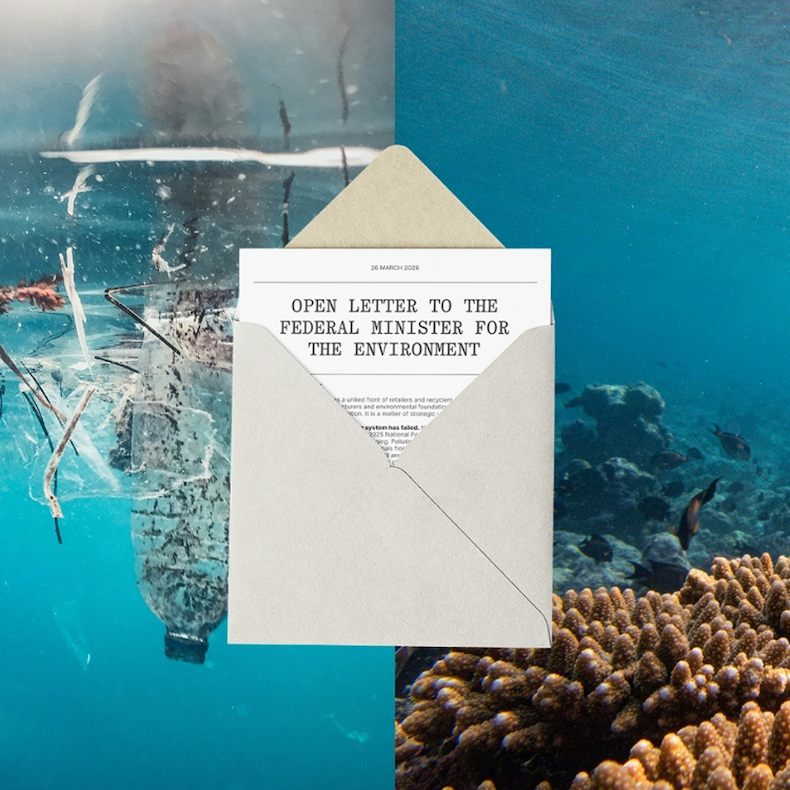
That's why we recently joined other organisations in co-signing an open letter to the Federal Environment Minister calling for a nationally mandated EPR scheme in Australia. The goal is simple: create stronger incentives for businesses to design out waste and take greater responsibility for the materials they introduce into the market.
When waste has a real cost attached to it, businesses become remarkably good at reducing it.
Many countries, including members of the European Union, as well as the UK, Canada and Japan, have already adopted forms of EPR. Australia has an opportunity to strengthen its approach and accelerate the transition toward a more circular economy.
Looking Forward
It took roughly 70 years for disposable culture to become deeply embedded in modern life.
We don't expect the solution to arrive overnight. But we're encouraged by what we're seeing.
Product innovation is improving. Consumers are demanding better alternatives. Policymakers are beginning to rethink incentives and accountability.
For the first time, Product, People and Policy are starting to move in the same direction.
The plastic problem wasn't created by a single decision, and it won't be solved by one either.
But if we continue designing better products, making better choices and supporting smarter systems, we believe the next chapter can look very different from the last.
And that's something worth being optimistic about.