
Walk down any supermarket aisle and you will see shelves filled with large plastic bottles of liquid cleaners.
What most people do not realise is this: most of what is being shipped is not cleaning product.
It is water.
At Skipper, we designed our products to avoid that entirely. Since 2020, we have prevented the shipment of 2,235,009 litres of water, the equivalent of roughly 56 petrol tankers.
This is not a marginal improvement. It is a different way of thinking about how products should be made and moved.
The uncomfortable truth about cleaning products
Most conventional cleaning products like hand soap or dishwashing liquid are made up of between 60 and 95 percent water.
That means:
-
You are paying to transport water
-
Brands are storing and shipping water
-
Supply chains are built around unnecessary weight
Water is already available in every home. Yet the system is designed to centralise it, bottle it, and send it across long distances.
Why rising fuel costs are exposing inefficiencies in shipping
With recent events, global fuel prices and supply disruptions have made shipping significantly more expensive.
When fuel costs rise, the inefficiencies of transporting heavy, diluted products become more visible.
Products that are mostly water are disproportionately affected, as they require more fuel to move without delivering additional value.
This has highlighted a fundamental issue in product design: unnecessary weight creates unnecessary cost and emissions. A standard 1 litre cleaning bottle weighs about 1 kilogram. Most of that weight is water.
If you remove the water, you remove:
-
Most of the shipping weight
-
A large portion of transport emissions
-
The need for bulky packaging
This is a product design issue, not just a logistics issue.
The solution: concentrated cleaning products
Concentrated cleaning products are designed to remove unnecessary weight.
Instead of shipping diluted liquids, they deliver only what is needed to clean.
This results in:
-
Lower shipping emissions per product
-
Less packaging
-
More efficient transport and storage
It is not a compromise. It is a more efficient system.
The logic behind refill cleaning products
Refill cleaning products extend this idea further.
Instead of repeatedly buying full bottles, consumers reuse a container and add water at home.
This approach:
-
Reduces plastic waste
-
Cuts down shipping volume
-
Lowers emissions across the product lifecycle
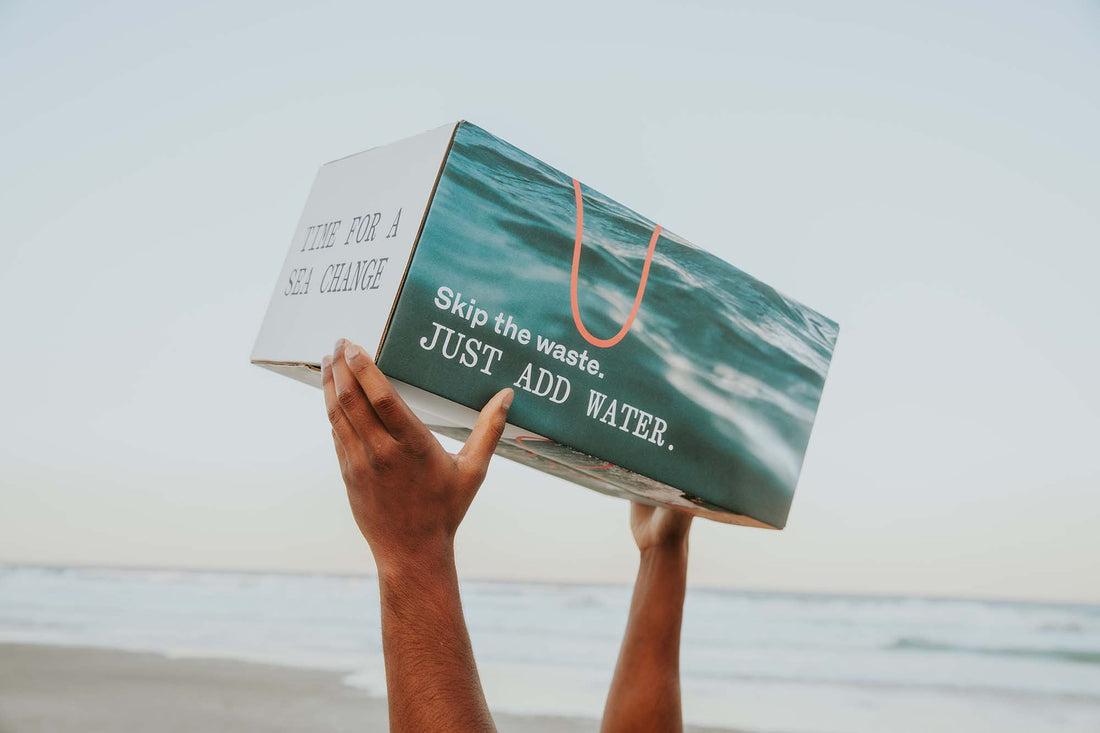
"Just add water" is not a trend. It is a correction to an inefficient system.
Why Skipper chose not to ship water
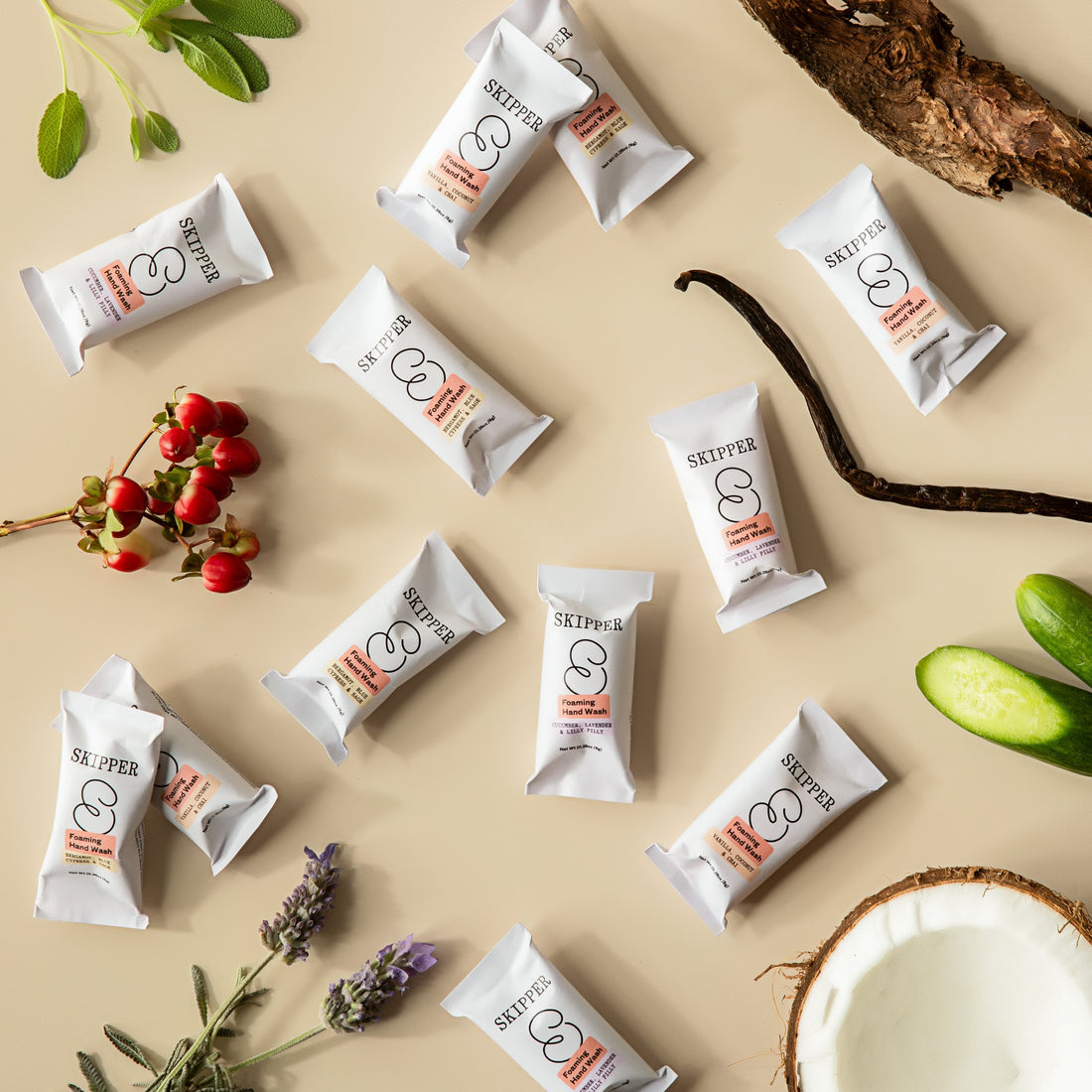
From the beginning, Skipper products have been designed to avoid shipping water.
By focusing on concentrates and refill formats, we have:
-
Prevented over 2.2 million litres of water from being transported
-
Reduced unnecessary weight across the supply chain
-
Built products that align with how they are actually used
This is a structural change, not a surface-level improvement.
A more efficient future
The shift is already happening.
Concentrated cleaning products are becoming more common Refill cleaning products are gaining adoption. Consumers are questioning unnecessary waste
The logic is simple. Do not ship what you do not need.